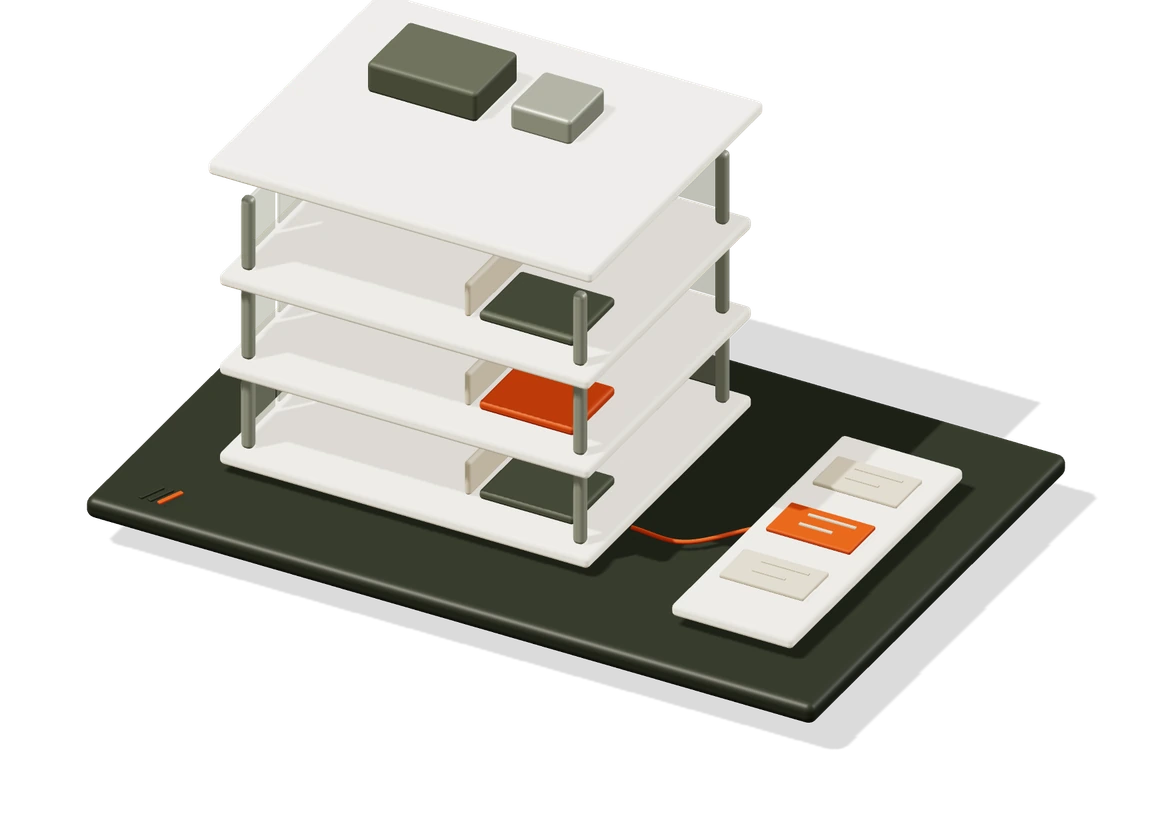
Define the right problem.
Map the workflow, the inputs and the decisions. Agree on what a useful result looks like.
A blueprint for the work.
- Workflow map
- Technical scope
01 / Engineered intelligence
From enterprise workflows to scientific computing, digital twins and generative media. We connect specialist agents, knowledge and tools around the way your organization works.
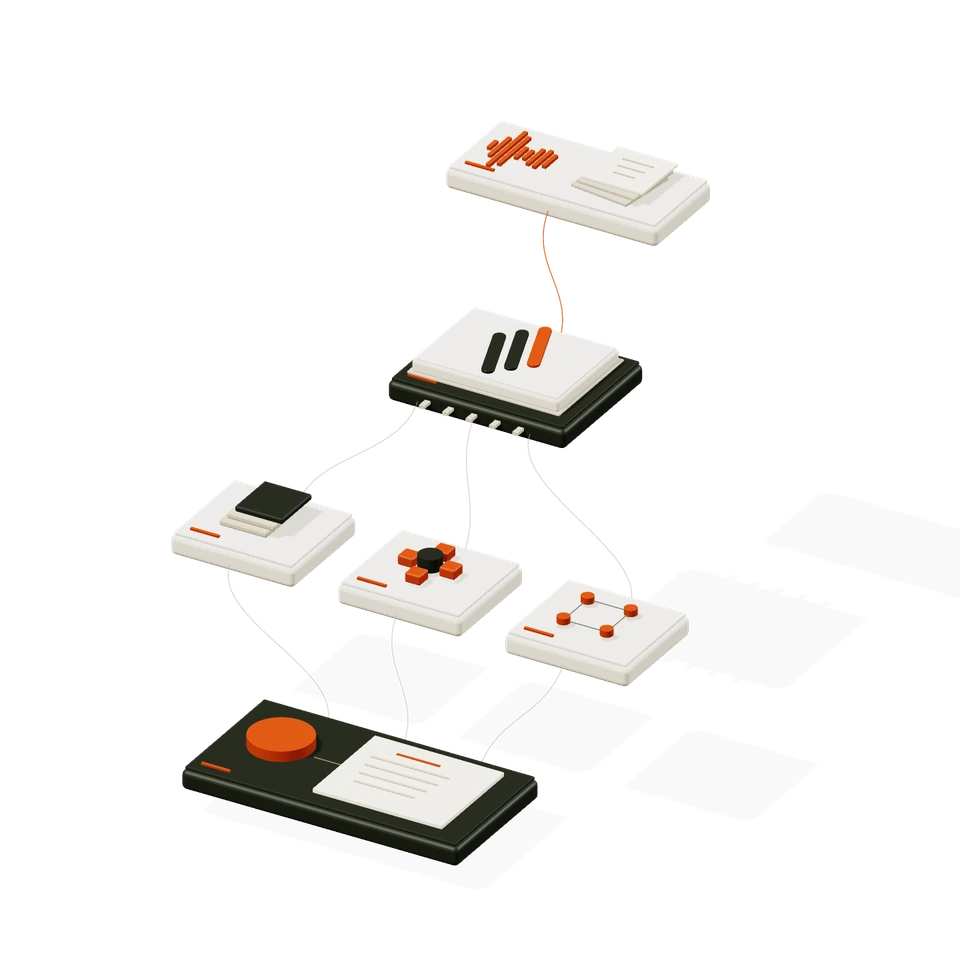
A request arrives with the context it needs.
01 / Inside the system
Documents, voice, drawings and operational signals. Bring the right information into one connected system.
One orchestrator gives each agent a clear role. Research, reasoning and action can happen together, with deliberate handoffs.
Check the result. Test the assumptions. Refine the model or route a decision to a person before the workflow moves on.
Turn the result into a useful answer, an artifact or an action inside your tools—with a clear trace of how it got there.
02 / THE TECHNOLOGY, CONNECTED
From knowledge and voice to scientific computing and digital twins. Twelve capability families, combined around your objective.
Make sense of every source.
03 CAPABILITY FAMILIESNext: Multimodal understanding
Make documents, databases and internal knowledge searchable, retrievable and useful to your models.
01 / Index the sources
EXPLORE THE STEPSA grounded answer with a path back to its sources.
Selected around
your requirements.
Twelve families. A custom architecture.
We select the combination around your data, tools and intended outcome.
03 / INTELLIGENCE IN CONTEXT
Science, engineering, care and operations. Explore how we connect the technology to the work your organization does.
An operational view that connects the place, the signal and the decision.
Facilities teams · Asset operators · Energy and infrastructure teams
Explore Buildings & energyONE TECHNOLOGY FOUNDATION. SEVEN WORLDS OF APPLICATION.Select your industry
Custom development, shaped around your data, systems and ambition.
Explore all solutions04 /MAKE IT REAL
From a useful idea to a working system. Three deliberate stages, with something concrete to review at each one.
Map the workflow, the inputs and the decisions. Agree on what a useful result looks like.
Connect the models, agents and tools. Turn the architecture into a first version you can try.
Test the edge cases, improve the weak points and connect the system to your environment.
Start with the work that matters.
Add complexity with purpose.
05 /A FEW THINGS FIRST
You don’t need every answer before we talk. A useful starting point is enough.
Have something else in mind?No. Start with a workflow, a technical question or a task that takes too much effort. We can turn that starting point into a useful first experiment.
An objective is enough to begin.06 /YOUR NEXT CHAPTER
Bring the challenge. We’ll connect the intelligence.